From our archive. This post was published in January 2024, and some details may have changed since.
Two Amazon programs sit behind most links from commerce content to Amazon.com, and they are easy to confuse. Amazon Associates (opens in a new tab) is Amazon's affiliate program for publishers. Amazon Attribution (opens in a new tab) is a measurement program for brands that sell on Amazon. They pay different parties, on different terms, for different reasons.
The two programs side by side
| Amazon Associates | Amazon Attribution | |
|---|---|---|
| Amazon division | Retail | Advertising |
| Who it's for | Publishers that can drive incremental audiences to Amazon.com | Brands that sell on Amazon.com |
| Payout model | Amazon pays the publisher 1 to 12%, based on the product category and publisher tier (size and history) | Amazon pays the brand a 10% Brand Referral Bonus (opens in a new tab) for traffic the brand drives to Amazon.com |
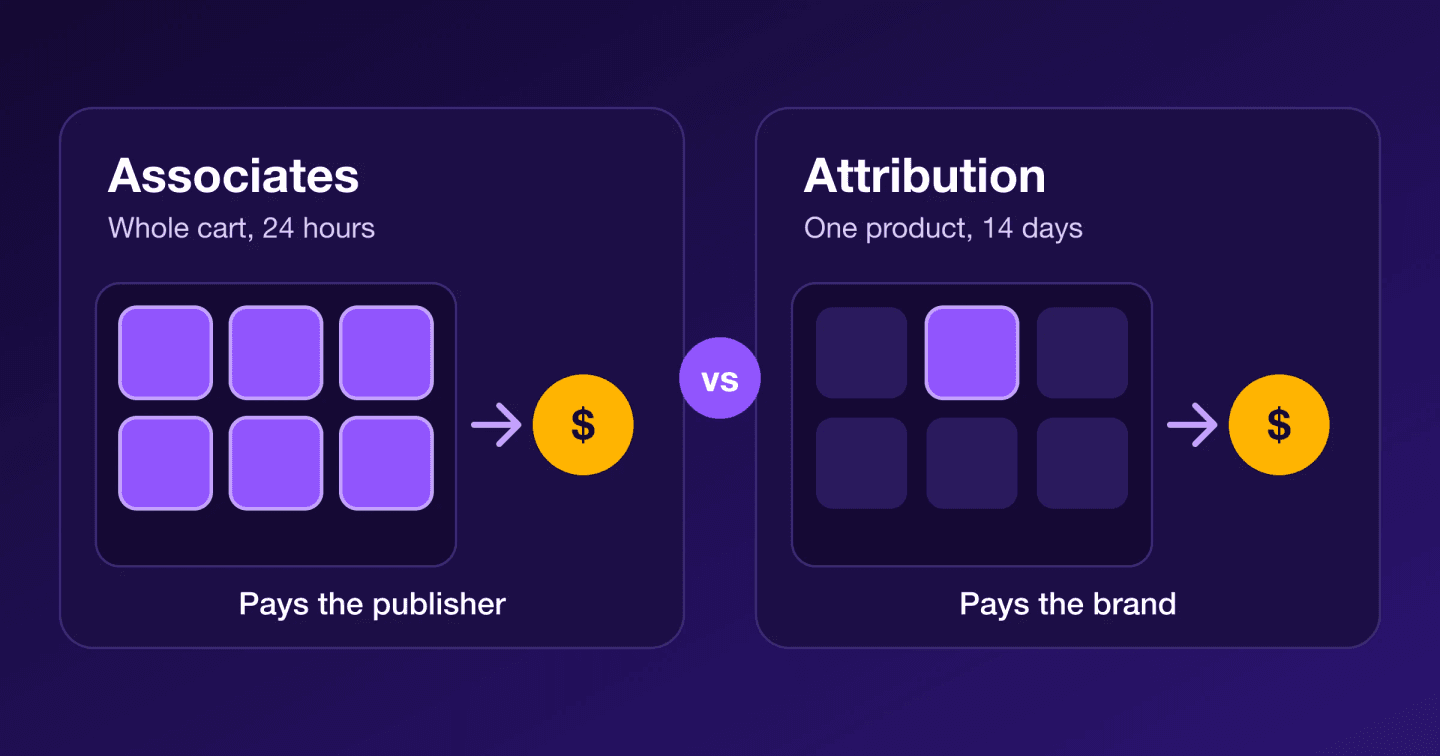
| Payout basis | 100% of the cart purchased where the publisher had the last click, known as the "halo" commission | The value of the brand's product tied to the click only: nothing else in the basket, and nothing if the shopper doesn't buy that product |
| Attribution window | Typically 24 hours from the last click | 14 days from the click |
| What users want from it | Publishers use Associates like any other affiliate program, to optimize page yield | Brands use Attribution to grow their audience and sales on Amazon, and their Best Seller Rank, which drives organic discovery on Amazon.com |
| Data provided | Limited, except for the few publishers with an ascsubtag that allows granular conversion tracking | Granular data on add-to-carts and sales, attributable to individual users, but only for the associated product |
Why the difference matters for publishers
Associates rewards a publisher for everything a reader buys after clicking through, so the number to watch is revenue per click across the whole basket. Attribution looks at one product. A brand cares whether the reader bought its item, and it values that purchase for what it does to the brand's ranking on Amazon.
That is why a brand can value a publisher's visit differently from the commission Associates would pay. It's also why page-level data matters: you need to see which pages send readers who buy, not just how many click.
Seller networks
A third kind of business has grown up between the two. A seller network works with brands that grant access to their Amazon seller data, and with publishers that link to those brands' products. The network passes the brand's Attribution code to the publisher so that it can be added to the publisher's existing links, then tracks the incremental sales that code produces. It charges the brand an agreed share and passes a portion on to the publisher.
Amazon sets the rules for both programs and can change them, so a publisher considering any arrangement that combines Associates and Attribution tags should check Amazon's current program policies first.
What to take from this
- Associates and Attribution belong to different parts of Amazon, and they pay different parties.
- The attribution windows differ: 24 hours for Associates, 14 days for Attribution.
- Granular conversion data is the exception for publishers and the norm for brands, so the brand side of the market often sees more than the publisher does.
Seeing what each page earns, down to the link, is the first step toward deciding which programs and partners are worth your readers' clicks.